COGENG Solenoid vs Hydraulic Valves Comparison for Heavy Equipment
Separate vs. Integrated: A Technical Comparison of Solenoid Valves and Hydraulic Valves for Heavy Equipment
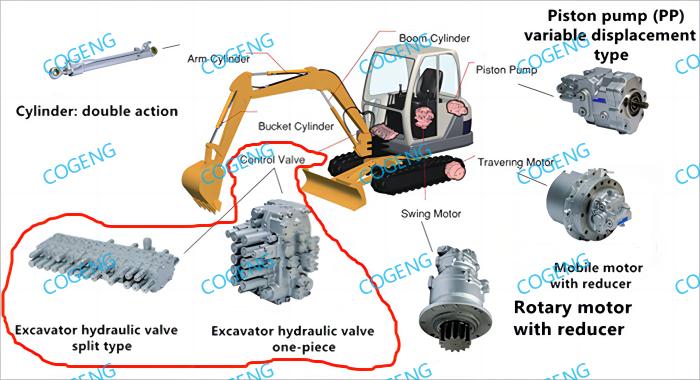
Understand the key differences to make smarter maintenance and procurement decisions for your excavator fleet.
In the hydraulic systems that power modern excavators—from compact units to 30-tonne machines—the marriage of electronic control and hydraulic power happens at the valve. Specifically, at the interface between solenoid valves (the electrical actuators) and hydraulic directional control valves (the fluid power distributors). Engineers face a fundamental design choice: should the solenoid valve be a separate, bolt-on component or an integrated, cartridge-style unit within the hydraulic valve body?
Both approaches exist across the Sumitomo, Hitachi, and Kobelco excavators that owners rely on daily. Understanding the trade-offs helps equipment managers stock the right spare parts, diagnose problems faster, and avoid costly misapplications. For a wide range of replacement solenoid valves and hydraulic components, visit the product catalogue at On the official COGENG website
1. Basic Definitions: Separate vs. Integrated Valves
| Configuration | Description | Common Application |
|---|---|---|
| Separate Solenoid Valve + Hydraulic Valve | The solenoid actuator is a distinct, replaceable unit bolted onto the side of a hydraulic valve body. A push pin or spool link transmits movement. | Main control valves on older excavators; high-flow circuits; applications where solenoids are frequently serviced. |
| Integrated (Cartridge) Solenoid Valve | The solenoid coil and poppet/spool assembly are combined into a single threaded cartridge that screws directly into a manifold or valve block. | Pilot control circuits, proportional pressure control, compact manifolds, newer machine designs. |
2. Separate Solenoid and Hydraulic Valve: Characteristics
Advantages
Independent Serviceability: If the solenoid coil burns out or the plunger sticks, you replace only the solenoid assembly. The hydraulic valve body—often a large, machined casting—remains untouched. This translates to lower part costs for common electrical failures.
Simplified Troubleshooting: A technician can manually override a separate solenoid with a push pin to test mechanical function of the hydraulic valve, isolating whether the fault is electrical or hydraulic.
Thermal Isolation: The solenoid coil, which generates heat during continuous operation, sits away from the hydraulic valve body. This reduces heat transfer to the hydraulic oil in high-duty-cycle applications.
Field Repair Flexibility: On a remote job site, carrying a spare solenoid is far lighter and more practical than carrying a complete integrated valve assembly. Many Sumitomo SH200 and SH210 operators keep replacement proportional solenoid valves on hand for precisely this reason.
Disadvantages
Increased Envelope Size: The bolt-on solenoid adds length and width to the valve package. In tight engine compartments, space is a premium.
Potential for Misalignment: Improper installation can cause binding between the solenoid plunger and the hydraulic spool, leading to sluggish response or premature wear.
Additional Sealing Points: The interface between solenoid and valve body requires an O-ring or gasket. A leak at this junction can allow moisture ingress into the solenoid or external oil seepage.
3. Integrated Solenoid Hydraulic Valve: Characteristics
Advantages
Compact, Lightweight Design: Cartridge valves thread directly into machined cavities, enabling dense manifold layouts. This is why modern excavator pilot control banks use integrated proportional solenoids extensively.
Superior Contamination Protection: With fewer external joints, integrated valves are less vulnerable to water spray, dust, and job site debris. Many carry IP67 or IP69K ratings.
Optimised Magnetic Circuit: The solenoid is designed as one system with the valve spool. Magnetic efficiency is higher, allowing faster response times and lower current draw for the same hydraulic output force.
Streamlined Assembly: For equipment manufacturers, integrated cartridge valves reduce assembly labour and eliminate separate solenoid mounting brackets.
Disadvantages
Higher Replacement Cost: When either the solenoid coil or the hydraulic section fails, the entire cartridge assembly must typically be replaced. A simple burned coil means discarding a perfectly good mechanical valve section.
Limited Manual Override Options: Many integrated valves lack external manual override pins, making on-site emergency operation or diagnostic testing more difficult.
Proprietary Cross-Reference Challenges: Some machine builders specify custom cartridge specifications, making it harder to find direct aftermarket replacements. Always verify specifications before ordering a replacement for your excavator. COGENG offers a comprehensive range of compatible solenoid valve replacements; check the current listings at https://cogeng.net/.
4. Head-to-Head Comparison Table
| Criteria | Separate Solenoid + Hydraulic Valve | Integrated Cartridge Solenoid Valve |
|---|---|---|
| Serviceability | Excellent—replace solenoid only | Fair—replace entire cartridge |
| Space Efficiency | Lower—bulkier assembly | Excellent—compact threaded design |
| Environmental Sealing | Dependent on interface O-ring | Inherently superior with fewer joints |
| Response Time | Good—mechanical linkage | Fast—direct magnetic actuation |
| Cost Per Failure Event | Lower (solenoid-only replacement) | Higher (complete cartridge replacement) |
| Field Diagnostic Ease | Manual override often available | Override often absent |
| Typical Machine Application | Main control valves, high-flow circuits | Pilot circuits, proportional control, compact manifolds |
| Aftermarket Part Availability | Widely available | Growing rapidly; verify cross-reference |
5. Practical Guidance for Excavator Owners
When to choose a separate solenoid replacement:
You operate older Sumitomo, Hitachi, or Kobelco excavator models with bolt-on solenoid actuators on main control valves.
Your maintenance strategy emphasises component-level repair rather than assembly-level replacement.
You need to keep spare parts inventory lightweight and cost-controlled for remote job sites.
When an integrated cartridge valve makes sense:
Your machine is a newer generation with densely packed hydraulic manifolds.
You prioritise long service intervals and environmental resistance (demolition, quarry, marine applications).
You are upgrading a system and have the manifold cavities to accept cartridge valves.
Maintenance Tip Regardless of Type:
Always depressurise the hydraulic system before removing any valve assembly. Contamination is the leading cause of solenoid and hydraulic valve failure—clean the surrounding area meticulously before opening any connection. After replacement, cycle the function several times and check for leaks before returning the machine to service.
6. The Aftermarket Advantage
Whether your excavator uses separate or integrated solenoid valves, the aftermarket offers significant cost savings over OEM dealer pricing—often 30-60% less—without sacrificing performance or durability. The key is sourcing from a supplier that maintains rigorous quality control and provides accurate cross-reference data.
At https://cogeng.net/, we supply precision-engineered replacement solenoid valves, hydraulic pressure sensors, and electronic control components compatible with Sumitomo, Hitachi, Kobelco, and other major excavator brands. Browse our catalogue to find the right part for your machine's specific serial number range.
Related Keywords for Search:
excavator solenoid valve replacement
hydraulic control valve comparison
cartridge solenoid valve advantages
Sumitomo excavator hydraulic parts
aftermarket solenoid valve supplier
COGENG hydraulic components
Disclaimer: All brand names and model numbers are used for compatibility reference only. COGENG is an independent aftermarket supplier and is not affiliated with Sumitomo, Hitachi, or Kobelco. Always consult your equipment service manual and a qualified technician for specific repair guidance.


Comments
Post a Comment